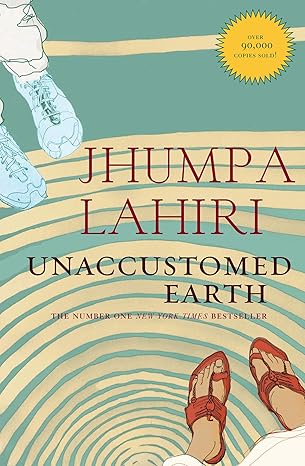
AUTHOR : Jhumpa Lahiri,
OUTLINE : This collection weaves intimate stories of family, marriage, guilt, and fate, tracing lives shaped by quiet secrets, fragile bonds, and chance reunions that echo long after the final page.
Rating – 4/5,
Pages – 352,
First Published – 01, April 2008,
Language – English,
Genres – Fiction, Short Stories, India, Book Club, Contemporary, Literary Fiction, Literature, Indian Literature, Adult
Synopsis:
Jhumpa Lahiri’s Unaccustomed Earth, by the internationally acclaimed Pulitzer Prize–winning author, is a beautifully crafted collection of eight stories that feel deeper and more emotionally layered than anything she has written before. Moving seamlessly from Cambridge and Seattle to India and Thailand, these stories step into the quiet, complicated lives of parents and children, siblings, friends, and lovers, capturing the delicate tensions that shape human relationships.
The title story introduces Ruma, a young mother adjusting to life in a new city, whose father visits and gently nurtures her garden while forming a tender bond with his grandson, all the while carrying a secret love of his own. In A Choice of Accommodations, what begins as a couple’s attempt at a romantic weekend unravels into something far more unsettling. Only Goodness explores the heavy burden of responsibility and guilt carried by a sister as her brother’s alcoholism threatens to destroy her family. The linked stories of Hema and Kaushik trace two lives intertwined by chance, separation, and fate, following them from childhood innocence to a poignant reunion years later in Rome.
Rich with Lahiri’s signature elegance, emotional insight, and quiet power, Unaccustomed Earth offers subtle yet profound reflections on love, loss, and belonging. It stands as a masterful work from a writer at the height of her craft, leaving a lingering resonance long after the final page.
My Experience:
I took my time with this book, reading it slowly and thoughtfully. While the half of the book felt measured and quiet, the second half drew me in far more deeply. Once again, I found myself discovering unfamiliar emotions, cultures, and ways of thinking, which is exactly why I love to read.
This is Jhumpa Lahiri’s third book, following the success of Interpreter of Maladies and The Namesake, and it carries all the hallmarks of her writing. She has an extraordinary sensitivity toward the shifting nature of human relationships, capturing their emotional nuances with remarkable precision, often softened by moments of subtle, poignant humor. Centered on two immigrant Bengali families in Cambridge, one temporarily living with the other, the narrative at first seems familiar. Beneath the surface warmth, however, lie quiet jealousy between the women and the first, unsettling stirrings of attraction felt by teenage Hema toward Kaushik.
Lahiri takes material that could easily feel familiar, even melodramatic, and elevates it to something profound by spreading the story across a wider emotional and historical canvas. The faint presence of violence and political unrest, first introduced when Hema and Kaushik discuss the Iran hostage crisis as children, gradually returns to shape and ultimately devastate their lives.
By the time I reached the final pages, I was so absorbed that I ignored a phone call, telling the caller I was in the middle of something important. With just three pages left, I finished the book and then sat quietly for nearly half an hour, letting the ending settle in my mind before finally calling back. That lingering silence said more than words ever could.
Please do share your thoughts in below comment.

 Eternal Bookish World